The Unclaimed Hour: Where Small Pockets of Time Go
The unclaimed hour becomes easier to direct when you note small gaps and choose whether each is for rest, one task or something you value.
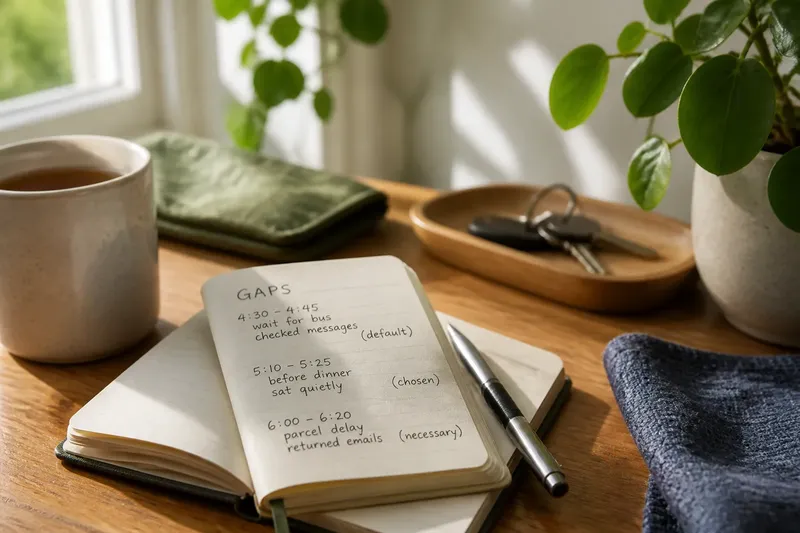
The unclaimed hour often begins as a short pause before a call or between leaving work and starting dinner. A simple record of these small pockets of time can show where they go before habit decides for you.
Not every pause needs a purpose. The useful distinction is between time you choose to give away and time that disappears by default. Recording a few gaps before assigning them can make that distinction visible without turning the day into a schedule to obey.
How gaps get claimed
Incidental tasks are easy to overlook because each seems too small to count. You reply to a message, put a cup in the sink, check for a parcel and begin sorting papers. Any one action may be reasonable. The pattern matters: a gap becomes occupied before you ask what you wanted from it.
Other gaps are not really free. A delayed appointment may leave you waiting with divided attention. A journey may be unscheduled but still needed to get home. A quiet interval after a demanding conversation may be the recovery time that lets you continue. Calling all of these spare time can make rest seem indulgent and obligations seem optional.
A brief record helps separate what happened from what you assume should have happened. Note the occasion, what took the time and whether the activity was chosen, necessary or simply the first thing in reach. A pocket notebook or plain phone note is enough. Keep it light.
Three recording methods
Choose a method that fits how you already move through the day. The aim is recognition, not a complete account of every minute.
Memory notes
At a natural stopping point, jot down a few gaps you remember and what filled them. This takes little attention while the day is unfolding, but tiny pauses and familiar habits are easy to forget. Treat it as a rough sketch.
Moment notes
When a gap appears, add a short entry: “waiting for the bus — checked messages” or “before lunch — sat quietly”. This captures what happens in the moment. Keep the entry plain; detailed commentary can become another task that consumes the gap.
Anchor notes
Choose a few natural points, such as after lunch or on arriving home, and record the gaps since the previous point. This suits a modest routine without constant monitoring. It may miss brief intervals, but can reveal transitions that repeatedly invite the same jobs.
Choosing a recording method
Start with the least demanding approach you are likely to continue. If your day is varied and you forget details, moment notes may show more. If checking your phone makes rest harder, use paper or a short memory note. If interruptions are frequent, anchor notes let you preserve your attention until a calmer moment.
Say you have a pause between finishing work and starting dinner. You use a pocket notebook to note what fills that interval: messages, a household task or sitting down. Over several entries, you notice that opening messages often leads to more small jobs, while sitting down gives you a clear break. The result is a choice between specific options, not a rule about what you must do.
Look for repetition rather than totals. Which gaps go to tasks you had already intended to do? Which are genuine obligations, and which feel restorative? A recurring wait or transition may be more useful to notice than a precise account of the day.
Options for a gap
Once you see where small intervals go, compare a few options instead of treating every gap as a call to be productive. The observation and decision can stay simple:
- The gap arrives during a demanding day. If you feel pressed, leave it open; if a task is genuinely urgent, choose that single task instead.
- A household job is visible. If you had already planned to do it and it fits the interval, do that job; if not, leave it for the time set aside for chores.
- You keep postponing a small activity. If reading, stepping outside or writing a note appeals, use the gap for that; if you feel tired, rest instead.
- Someone asks for your attention. If you want to respond and can do so now, take the request; if not, say when you can return to it or decline where appropriate.
- You are between obligations and feel unsettled. If quiet would help, leave the interval unfilled; if you need to prepare for what comes next, do one bounded preparation task.
- A message notification appears. If it concerns something you need to handle now, respond; if it can wait, silence the notification and return to the activity you chose.
What is not worth the effort is tracking every pause, assigning a value to it or trying to recover each gap later. That can make ordinary life feel like an audit. A few clear observations are enough to decide whether a recurring habit serves you.
Questions about spare time?
How long should I keep a time record?
Keep notes until you recognise a recurring pattern, then stop or return to them when your circumstances change. The point is to inform a choice, not maintain a permanent diary.
Should I record every short break?
No. Record only gaps that seem to disappear in a familiar way or leave you wishing you had chosen differently. Skipping the rest keeps the method from becoming another demand on your attention.
What if someone else takes up a gap?
Note that plainly, without treating it as evidence that you should have acted differently. The entry may help you distinguish a genuine commitment from a moment when you would prefer another arrangement.
Can doing nothing be a deliberate use of time?
Yes. An unfilled interval can offer breathing room between obligations without producing anything visible. If that is what you need, leave the gap open without defending it as preparation for a later task.
Make the choice visible
Recording the unclaimed hour is useful because it puts an unnoticed habit into view, not because every gap needs reclaiming. When a pause starts filling with incidental work, name what is happening. Then decide whether to continue, leave the space open or give it to something you value. A small observation can make the next choice more clearly yours.